Best Versailles Bike Tour (Complete Guide)
Oct 20, 2026 | French Regions
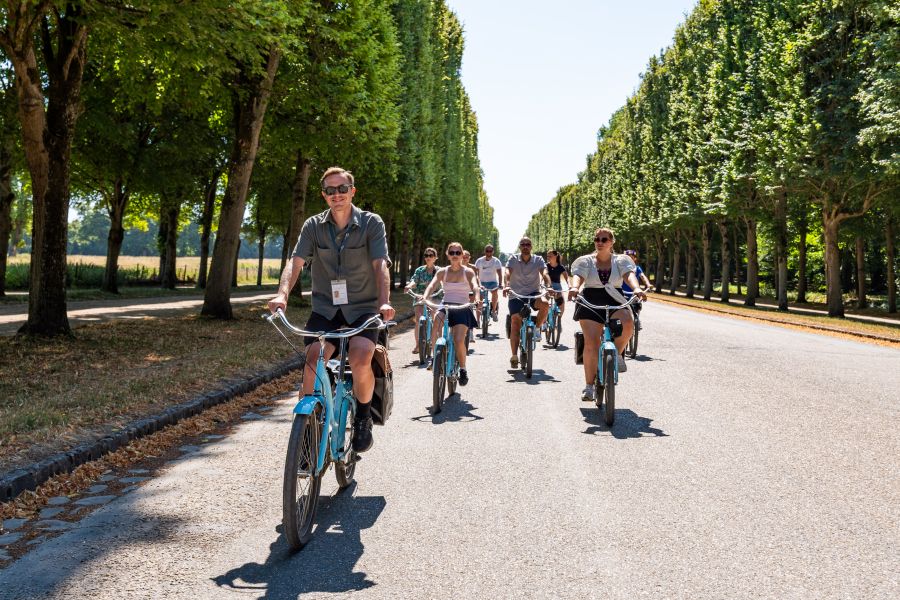
There is a particular moment when Versailles begins to feel different from the place most visitors expect. It often happens beyond the palace gates, where the crowds thin out, the gardens open into vast green perspectives, and quiet paths lead toward lakes, groves, and the distant edges of the royal estate. Exploring Versailles by bike reveals a side of the royal domain that is easy to miss on foot. The palace may be the main attraction, but the surrounding landscape tells another story. It is a story of royal ambition, carefully controlled nature, leisure, and the extraordinary world built around the French monarchy. For travelers looking to understand Versailles beyond its famous Hall of Mirrors, a bike tour offers a more complete perspective. It transforms a visit to a monumental palace into a journey through the landscape that made it possible.
Why Exploring Versailles by Bike Makes Sense
The Estate of Versailles is much larger than the palace itself. Beyond the formal gardens lies an extensive landscape of wooded paths, ornamental lakes, open lawns, and historic buildings. Distances that seem modest on a map can quickly become tiring when explored entirely on foot. A bicycle changes the experience. It allows visitors to move naturally between different parts of the estate while maintaining a sense of discovery. Instead of concentrating on a single monument, the journey becomes about how the palace, gardens, and surrounding countryside fit together. This is especially valuable for travelers with limited time. A well-planned Versailles bike tour can combine the principal gardens with quieter areas that many visitors never reach, creating a broader understanding of the royal domain without turning the day into a continuous walk.
The Royal Landscape Behind the Palace
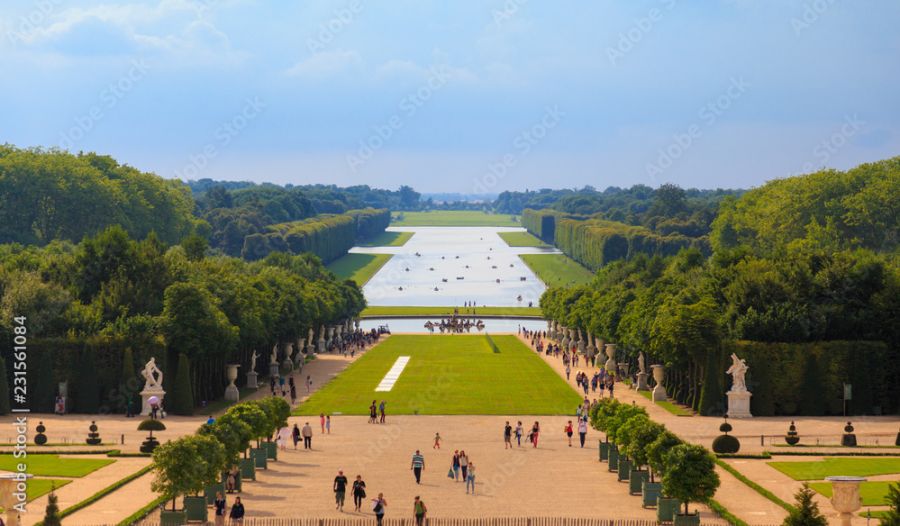
Versailles became the center of French royal power under Louis XIV, who progressively transformed his father's hunting lodge into an extraordinary royal residence. The court moved there permanently in 1682, making the palace a central stage for the political and ceremonial life of the monarchy. The landscape was an essential part of this transformation. André Le Nôtre, the celebrated royal landscape architect, developed the gardens according to principles of symmetry, geometry, and perspective. Long avenues, precisely arranged parterres, fountains, and carefully framed views expressed an ideal of order in which nature appeared subject to royal authority. Yet the estate was not designed exclusively for formal ceremonies. It also offered space for promenades, hunting, entertainment, and private retreat. The Grand Canal, completed in the late seventeenth century, became one of the defining features of this immense composition. Cycling through the domain helps reveal the scale of the original ambition. The palace was never an isolated building. It belonged to a much larger environment designed to shape how people moved, looked, and experienced royal power.
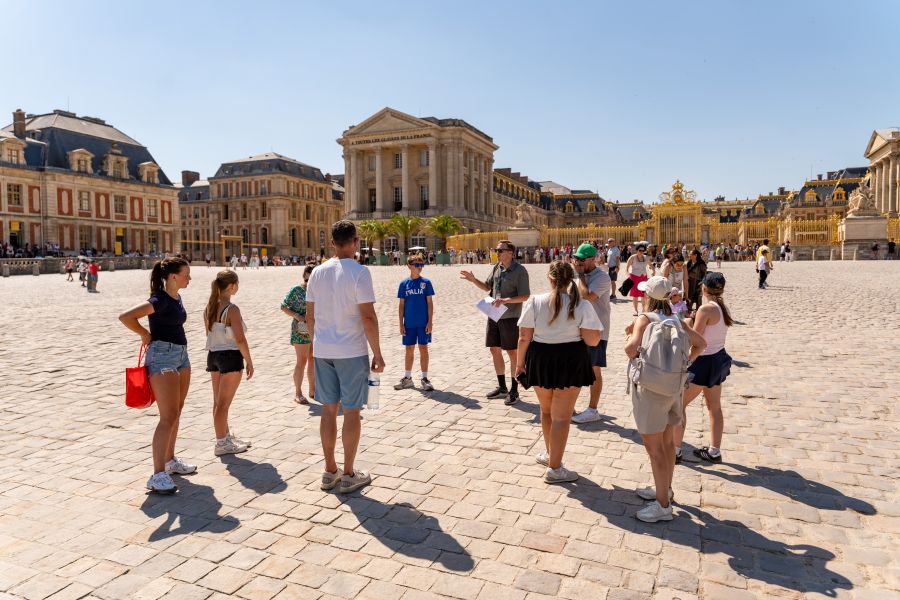
What the Versailles Bike Experience Feels Like
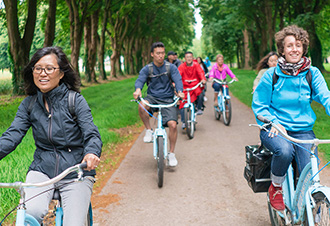
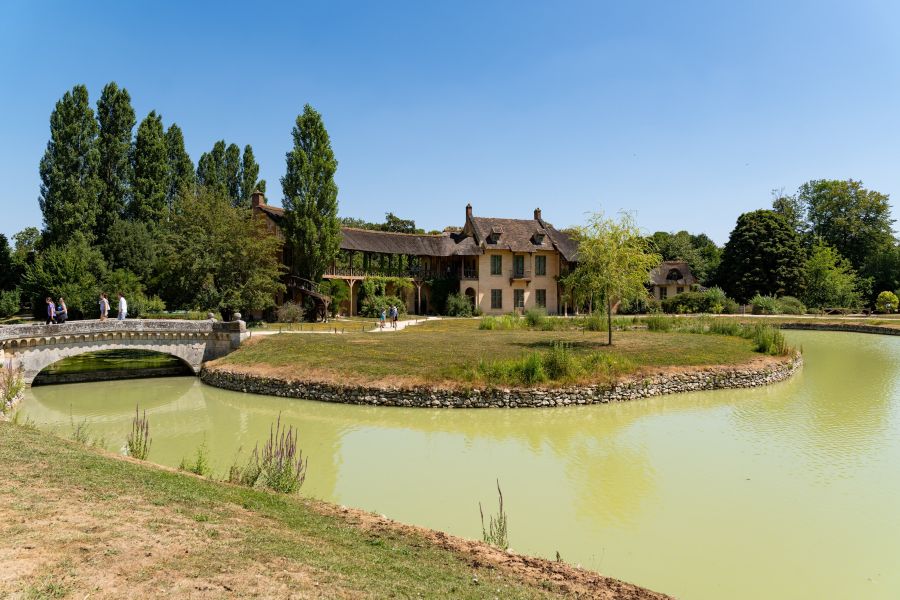
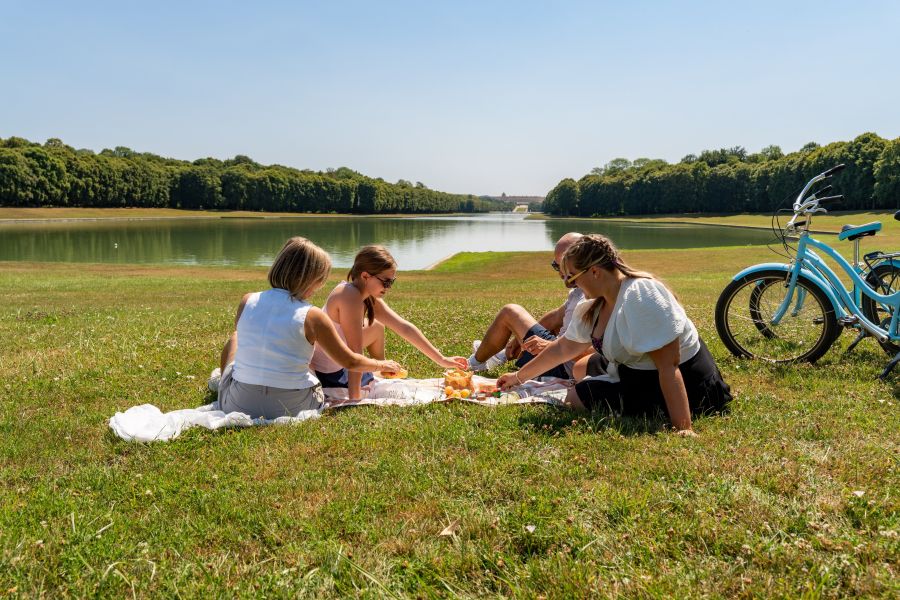
The pleasure of cycling at Versailles comes from the contrast between monumental architecture and open landscape. One moment, the palace gardens impose their precise geometry. A little later, tree-lined paths offer shade, the Grand Canal stretches across the view, and the estate feels surprisingly peaceful. The rhythm is different from that of a conventional sightseeing visit. There is time to notice the changing perspective of an avenue, the relationship between water and architecture, or the way the formal gardens gradually give way to greener, more secluded spaces. Depending on the route, a ride may also reveal the Petit Trianon and the Queen's Hamlet, associated with Marie-Antoinette and her desire for a more private world away from the formal rituals of court life. These places add another dimension to Versailles, showing that even within the royal estate, different ideas of power, intimacy, and nature could coexist. A bike tour is therefore not simply a practical way to cover distance. It changes the pace of the visit and makes the estate feel like a landscape to explore rather than a sequence of sights to check off.
Why Many Visitors Miss the Best of Versailles
Most visitors naturally focus on the Palace of Versailles. Its royal apartments, ornate decoration, and Hall of Mirrors are compelling, particularly for a first visit. However, the popularity of the palace can draw attention away from the immense estate beyond its walls. Time is another obstacle. After walking through the palace and its main gardens, many travelers have little energy left to explore the more distant areas. Others underestimate the distances involved or are unsure how to organize their route. As a result, the wider domain can become a backdrop rather than an essential part of the experience. This matters because the landscape explains things the palace alone cannot. It reveals how Versailles functioned as a place of leisure, spectacle, and retreat, as well as a symbol of centralized power. Without exploring beyond the main buildings, visitors see the royal residence but only part of the world it represented.
Understanding Versailles Beyond the Royal Image
The history of Versailles is often told through Louis XIV, court ceremonies, and the grandeur of absolute monarchy. Yet the estate also reflects changing attitudes toward nature, architecture, and private life. The contrast between Le Nôtre's formal gardens and the more intimate setting of the Queen's Hamlet is particularly revealing. The first expresses control, hierarchy, and carefully organized space. The second evokes a more pastoral ideal, even though it remained part of an elaborate royal estate. These different landscapes reveal the complexity of Versailles. It was simultaneously a political center, an artistic achievement, and a place where royal life unfolded in public and private settings. Exploring by bicycle makes these contrasts easier to understand because the transitions happen gradually. The landscape itself becomes part of the historical explanation.
Choosing the Best Versailles Bike Tour
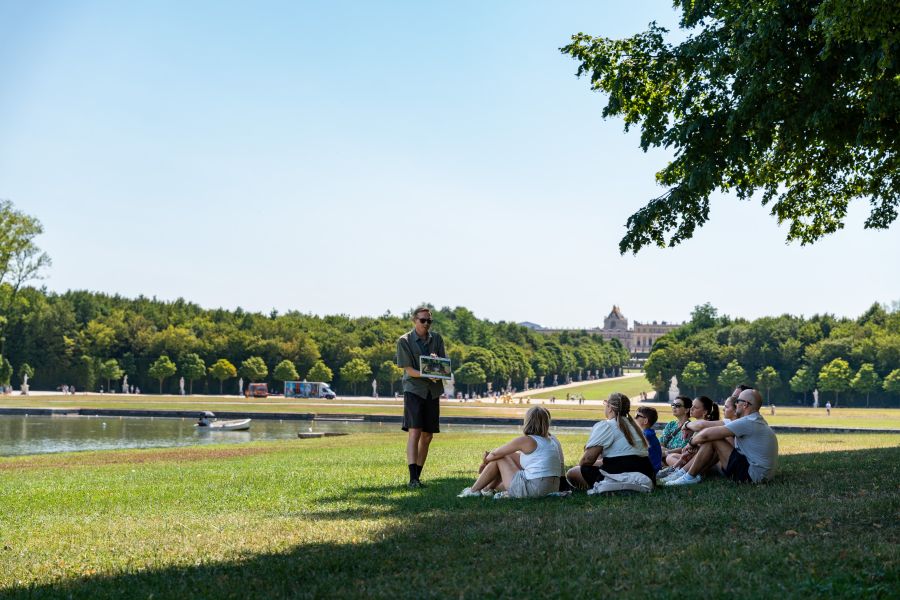
The best Versailles bike tour depends on what you want to discover. Some visitors prefer to concentrate on the gardens and the Grand Canal, while others want to explore the wider estate, including the Trianon area and the Queen's Hamlet. A guided experience can be especially useful for understanding the historical connections between these places and the palace. It is also worth considering how the cycling fits into the rest of the day. Palace admission, garden access, seasonal fountain events, and the opening arrangements for different areas can vary. Checking the itinerary and what is included before booking helps avoid surprises. Blue Fox Travel's Versailles experiences offer a way to discover the royal estate with greater context, connecting its celebrated architecture with the landscapes and stories that many visitors overlook. For travelers who want to understand Versailles beyond the palace itself, a guided visit can bring these different parts of the domain together. Versailles is more than a palace surrounded by gardens. It is an entire landscape shaped by history, ambition, and changing ideas of royal life. Seeing it by bike allows that larger story to emerge, one path and one perspective at a time. Sometimes, the best way to understand a royal world is to leave the palace behind for a while and explore the landscape that gave it meaning.