How to Use the Metro in Paris (Simple Guide for Americans)
Oct 14, 2026 | Paris travel tips
The first time you enter a Paris Métro station, the experience can feel a little overwhelming. A staircase disappears beneath the street, trains arrive from several directions, and signs point toward destinations that may mean very little to a first-time visitor. Around you, Parisians move with the confidence of people who have followed these routes for years. Yet the Paris Métro is one of the easiest ways to explore the city once you understand a few simple rules. It connects historic neighborhoods, famous museums, local markets, and quiet residential streets. More importantly, it offers a different way to experience Paris, far beyond what you see from a taxi window.
Understanding How the Paris Métro Works
For American travelers accustomed to driving or relying on rideshare apps, the Paris Métro can be a welcome change. Instead of navigating traffic, you can cross much of the city underground in minutes. The network has 16 numbered metro lines, each identified by its own color and route. Unlike many American subway systems, where express and local services can complicate a journey, Paris Métro routes are generally straightforward. The most important detail is the direction of travel, indicated by the name of the line's final station. For example, if you want to take Line 1 toward the Louvre from the Arc de Triomphe area, you need to check which terminus appears on the signs and choose the correct platform. Once you know your destination and direction, the journey becomes much easier. The RER is different. These larger regional trains connect central Paris with destinations farther away, including Versailles and Disneyland Paris. Although the Métro and RER share some stations, they are separate systems with different route patterns.
Tickets, Cards, and the Rules to Know
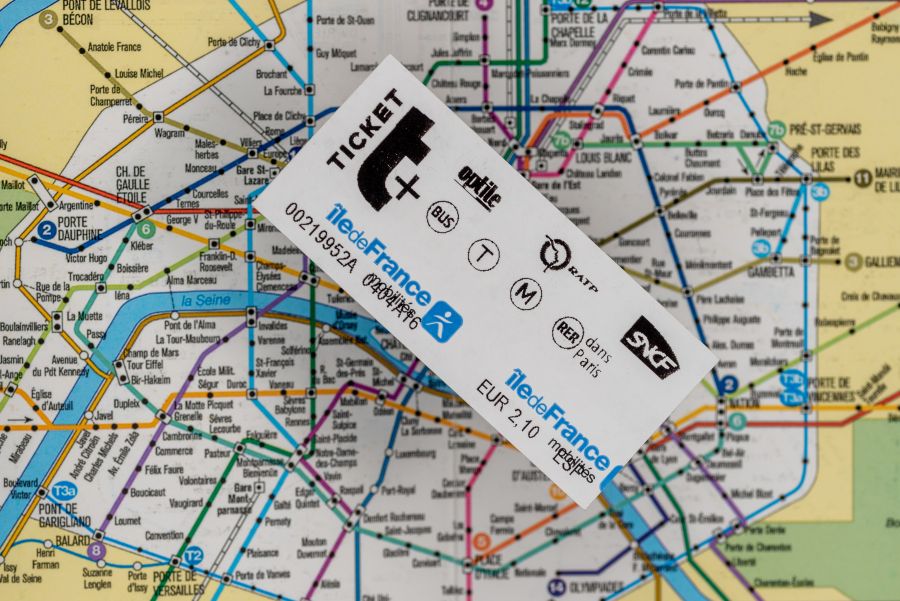
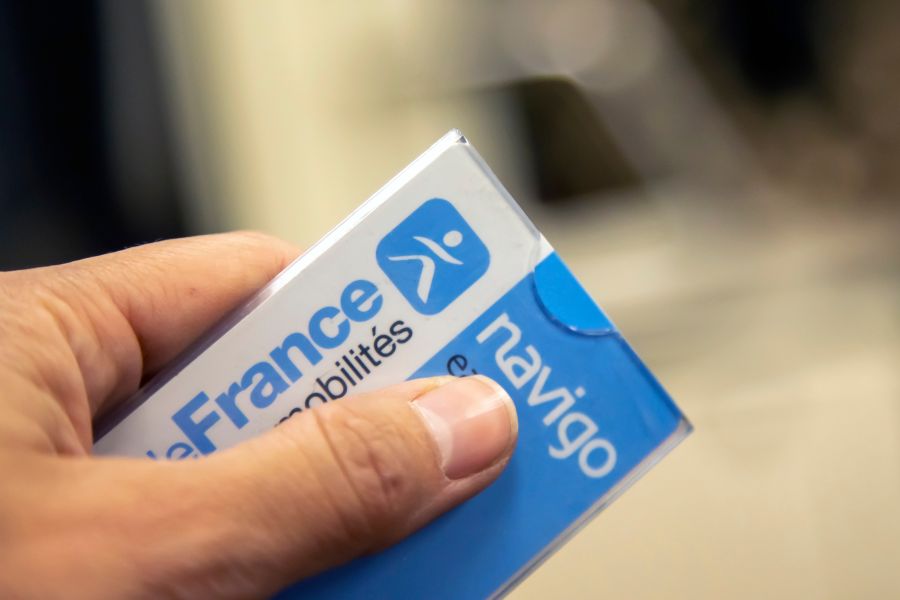
Paris changed its ticketing system in 2025, simplifying many fares into separate categories for metro, train and RER journeys, and for bus and tram journeys. In 2026, a standard Metro-Train-RER ticket costs €2.55. It can be used across the Île-de-France region, with specific airport stations excluded from its normal validity. For occasional visitors, the easiest options are usually a Navigo Easy pass or a compatible smartphone using the official Île-de-France Mobilités app. Tickets can be loaded onto the pass or purchased digitally. The important thing is to choose the correct ticket for your journey, especially when traveling to or from an airport. One detail catches many Americans by surprise: every traveler needs to validate their own ticket. A family or couple cannot simply pass through the gates using one person's ticket. Tap your phone or card on the reader, wait for the gate to open, and keep your ticket or travel medium accessible until you finish your journey. A Metro-Train-RER ticket also allows certain connections within the network for up to two hours, provided you do not exit the system. Bus and tram journeys require a different ticket category. Airport journeys have their own fares and conditions, so check before setting off.
Finding Your Way Through the Stations
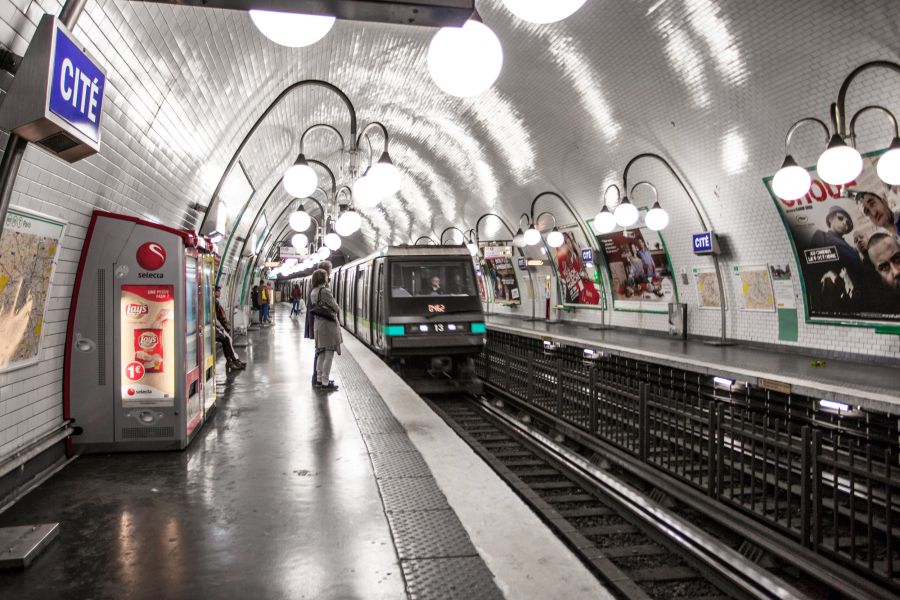
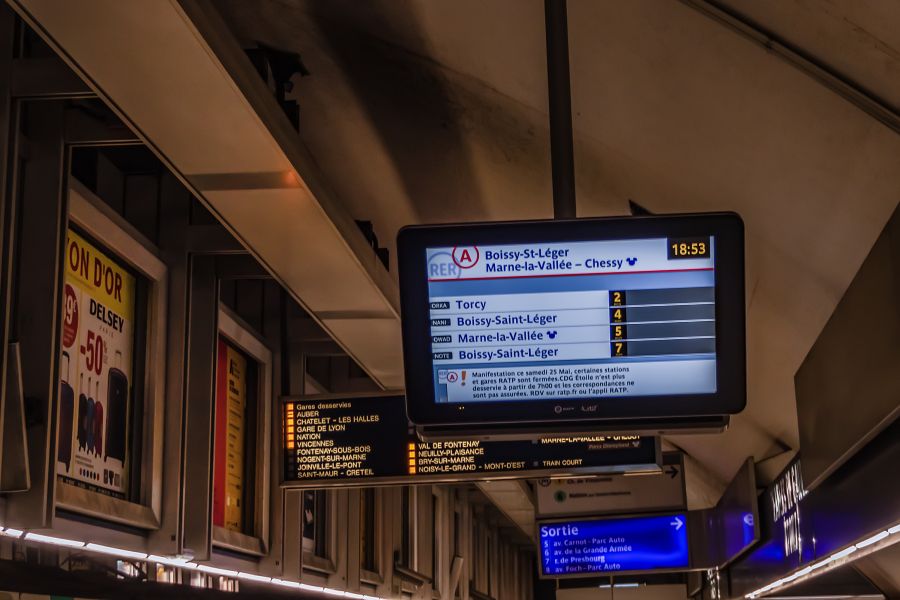
Once you have passed through the gates, look for the line number, its color, and the direction shown on the signs. The name of the final station is your most useful reference point. Follow the arrows until you reach the correct platform, then check the map to make sure your stop is on that side of the route. Most stations display maps above the platforms, and diagrams inside the trains show the stops along the line. Electronic boards indicate waiting times and, where relevant, the stations served by an approaching train. If you need to change lines, follow the signs marked Correspondance. You do not normally need to exit through the ticket gates to transfer between Métro lines. When you reach your destination, follow the blue exit signs, marked Sortie. Some large stations have several exits, each leading to a different street or landmark. A navigation app can help you plan the journey before you leave. However, learning to read the station signs gives you more independence, especially when you need to adjust your plans along the way.
The Paris Métro Has a History Beneath Its Streets
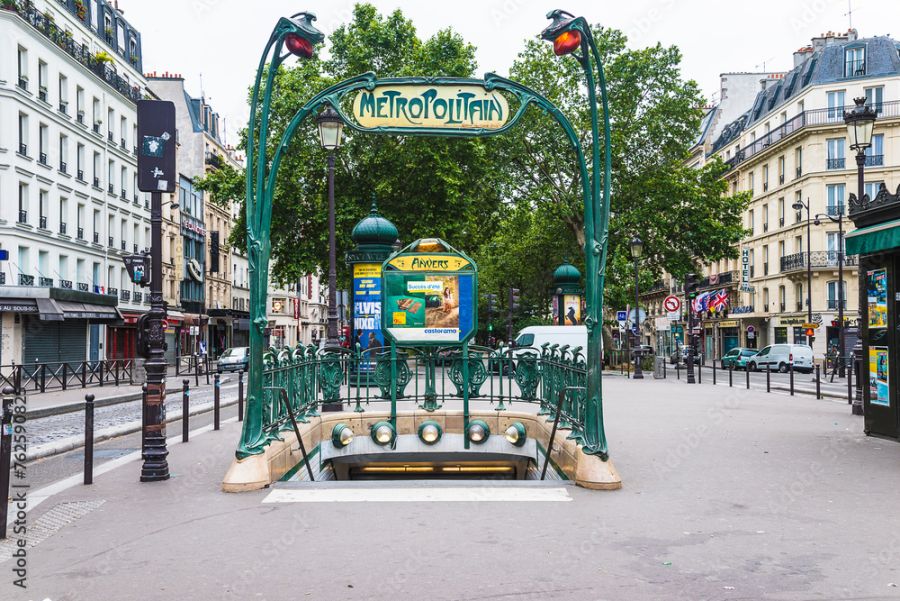
The Métro is more than a practical transport system. It is part of the city's identity. The first line opened on July 19, 1900, during the Paris Exposition, when the city was attracting visitors from across the world. Designed to help people move through an increasingly modern capital, the network grew alongside Paris itself. Some of its earliest entrances still feature the flowing ironwork associated with architect Hector Guimard and the Art Nouveau movement. These entrances are easy to miss when you are concentrating on directions, but they reveal how carefully the Métro was integrated into the city's architectural character. Inside the stations, the atmosphere changes from one neighborhood to another. Some platforms are bright and contemporary, while others retain historic details, distinctive tilework, or decorative references to nearby landmarks. Traveling underground becomes a small encounter with Parisian design and urban history.
What the Métro Feels Like in Everyday Paris
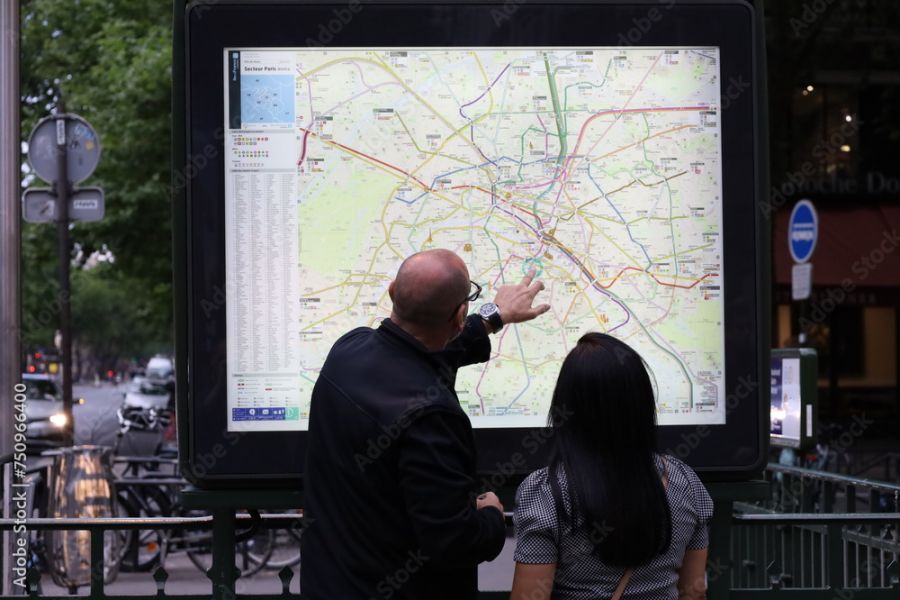
The Paris Métro is rarely just about getting from one place to another. During rush hour, commuters move quickly, conversations remain relatively quiet, and passengers instinctively make room for people leaving the train before boarding themselves. At other times, the journey feels almost leisurely. A musician may be playing in a corridor, sunlight may reach the entrance of an underground station, or an unexpected exit may bring you directly into a neighborhood square. For American visitors, the rhythm can feel different from public transportation at home. Walking is an essential part of the experience. A station may be close to a landmark on the map but still involve stairs, long corridors, or several minutes on foot above ground. Comfortable shoes, a little patience, and an awareness of your surroundings make a real difference. Keep your belongings secure, particularly in crowded stations, and avoid standing in doorways or blocking escalators.

Why Visitors Often Miss What Makes It Special
Many travelers approach the Métro as a challenge to solve as quickly as possible. They focus on the right ticket, the correct platform, and the fastest route between attractions. That is understandable, especially during a short stay. But concentrating exclusively on efficiency can make the journey feel disconnected from the city above. A station exit can introduce you to a street you might never have chosen deliberately. A short walk between two nearby stops may reveal a bakery, a neighborhood café, or an architectural detail absent from your itinerary.The Métro also helps explain the scale of Paris. Its network connects celebrated monuments with the places where residents work, shop, and meet friends. It makes the city feel less like a collection of tourist attractions and more like a living urban landscape.
Experiencing Paris Beyond the Journey
Once you understand the basics, the Métro becomes a tool for exploring rather than something to worry about. You can move from the historic center to Montmartre, cross the city for a museum visit, or venture into a different neighborhood without planning every detail around road traffic. And while the underground network makes independent travel easier, understanding the city above ground adds another dimension. Knowing why a neighborhood developed as it did, how its architecture reflects its past, or what makes its streets distinctive can transform an ordinary stop into a meaningful discovery. For travelers who want to connect these everyday journeys with the history and character of the city, Blue Fox Travel's guided Paris experiences offer an opportunity to explore beyond the usual landmarks and understand the stories that make each neighborhood unique. The Paris Métro may take you beneath the streets, but its greatest value is what it makes possible above them. Learn the system, follow your curiosity, and let the city reveal itself one stop at a time.